
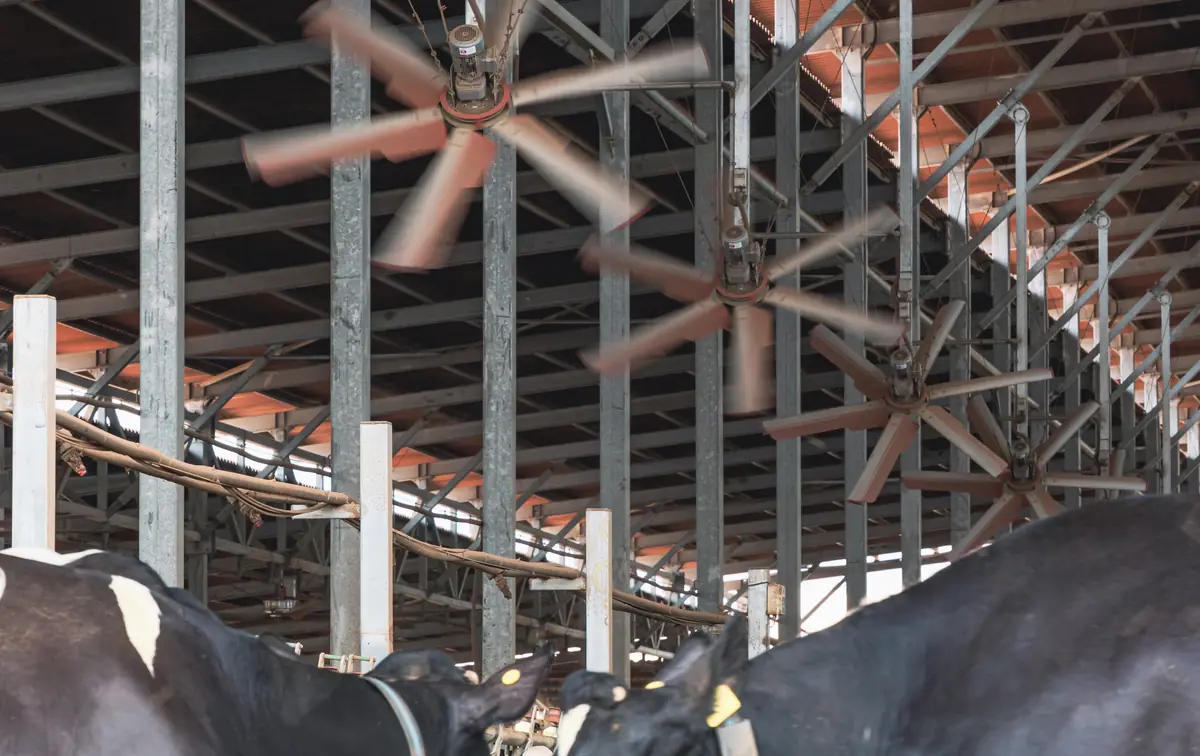
Smart Cooling
A breakthrough in farm productivity.
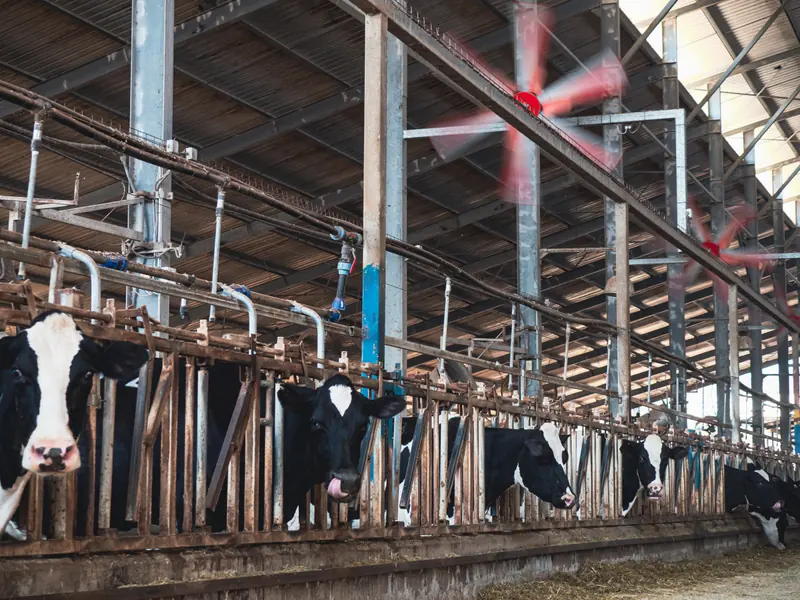
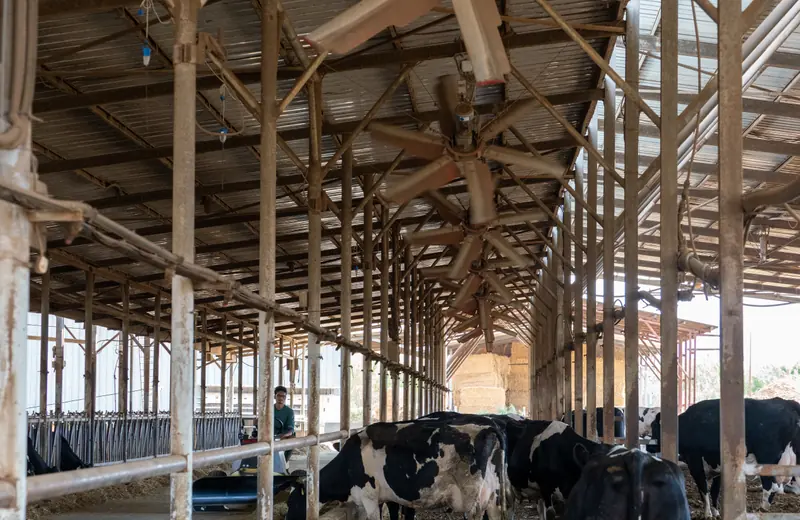
Every cow has free, voluntary access to cooling. Fans and showers switch on by zone, only when cows are there. Nobody herds them into forced cooling sessions.
+6.4 kg of summer milk per cow per day. ENGS trial data, 4-year average, compared with forced cooling.
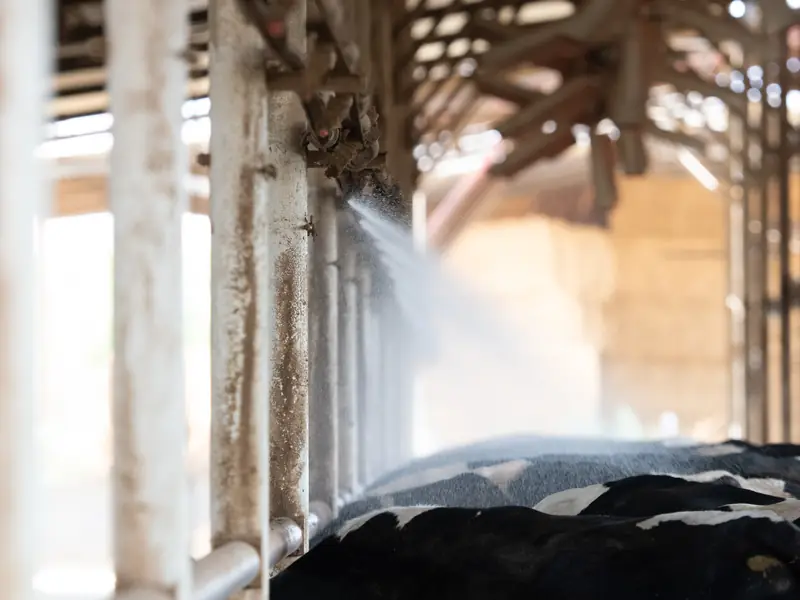
- Behaviour-basedCooling that responds to how each cow behaves.
- Free accessVoluntary cooling, without forced sessions.
- Remote controlFarm map, zones and thresholds.
Why it matters
Cows begin to suffer above a temperature-humidity index (THI) of 65.
Heat stress costs 15–35% of milk yield per cow per year, and a 50–70% drop in conception rates.
Sources: St-Pierre et al., J. Dairy Sci. 2003. De Rensis & Scaramuzzi, Theriogenology 2003.
How many heat-stress days does your region have?
Choose your country and region: the days a year, 2015 to 2025, by the day’s average temperature-humidity index (THI).
days a year at THI 65 or more
of them at THI 72 or more.
Days a year, by the day’s average THI
- Under 60
- 60–65
- 65–68
- 68–72
- 72–76
- 76 and over
There are no figures for this region yet.
The figures could not be loaded. Please try again.
Farming outside Europe? Ask for your farm’s estimate below.
How it works
Sense
Tags collect behaviour, location, ambient temperature and humidity, around the clock.
Analyze
The IFeel index scores each cow's heat stress from her behaviour, the temperature-humidity index (THI), the temperature around her, and wind speed and direction.
Activate
Fans and showers switch on by zone, only when cows are present.
Optimize
AI models improve the cooling cycle over time. You control the farm map, zones and thresholds remotely.
Results with Smart Cooling
ENGS trial results comparing Smart Cooling with forced cooling, across multiple farms and years. These figures describe the trials. Get an estimate for your own farm
August conception rate
One test farm, year over year
Lying time, minutes per day (+70%)
Bar length is out of the 1,440 minutes in a day.
Hoof issues
+6.4 kg/day
More summer milk per cow, 4-year average
650–1,000 kg
Milk gained per cow per year
0.99
Summer to winter milk ratio. At 1.0, heat barely affects production. Smart Cooling completely closed the gap
Up to 70%
Water saved
What could Smart Cooling return on your farm?
How much Smart Cooling returns depends on how many days above THI 65 your farm has, and on your herd. Tell us where you farm: ENGS will work out an estimate from your location’s weather history and email it to you.
In your estimate
- Heat-stress days a year at your location
- The milk your herd could gain
- What that milk is worth, and how soon the system could pay for itself
- Every assumption, so you can check it
Thank you. Your estimate is on its way.
ENGS will work it out for cows near , , and send it to .
This form needs JavaScript. To ask for an estimate, contact ENGS.
Questions
How does Smart Cooling decide when to cool?
It uses behaviour and environmental data to calculate the IFeel heat-stress index for each cow. Fans and showers activate by zone, only when cows are present.
Do cows have to be herded into cooling sessions?
No. Cows have free, voluntary access to cooling, without forced cooling sessions.
Which tags does Smart Cooling use?
It runs on the same ENGS tags that power heat detection, health monitoring and lameness detection.
What did the trials measure?
ENGS multi-farm, multi-year trials measured milk production, conception, lying and feeding behaviour, hoof issues and resource use. Summer milk gain averaged 6.4 kg per cow per day over four years.
Can I control the system remotely?
Yes. Remote control includes the farm map, cooling zones and activation thresholds.